
Dolton Previous Resident Sources
One Dolton address may require several eras of evidence. The current parcel and deed indexes establish the land and recorded transfers. Printed directories and released census schedules add household clues. Newspapers, cemetery indexes, and maps help bridge years when neither source gives a clear answer. Start with the newest reliable parcel, then move backward.
| Source | Verified years | Keeper | Address-history value |
|---|---|---|---|
| Clerk Recordings System | Current live index; date-stamped by portal | Cook County Clerk | Grantor, grantee, instrument, document number, legal description |
| Dolton city directories | 1922–1925 and 1928–1929 | Newberry Library | Name and address clues from printed volumes |
| Sanborn maps | 1897, 1911, and 1950 | Library of Congress and Chicago Public Library index | Building footprint, use, materials, and lot context |
| Federal census | Public schedules through 1950 | National Archives and library databases | Household members and neighborhood sequence |
| CookViewer archive | 2000–current | Cook County | Parcel history, PIN, geometry, and map layers |
For recent previous residents, begin with CookViewer, the Assessor, and recorded deeds. For a 1920s question, move quickly to the verified directory runs, then test the nearest census and newspaper. A nineteenth-century address needs a plat, legal description, Sanborn sheet, and village or township history because Dolton was incorporated only in 1892.
Begin Dolton Resident History
The CookViewer parcel map searches by address or Property Index Number and can return parcel geometry, municipality, township, and map reports. Its historical parcel archive reaches from 2000 to the present. Use that modern parcel as the fixed point for the backward trail.
Copy the 14-digit PIN, legal description, and exact situs address. Situs means the physical property location, which may differ from the tax mailing address. If the current lot came from a split or consolidation, the legal description and historic parcel archive may expose that break. A postal address alone is less durable.
Dolton Resident Recordings Carry Dates
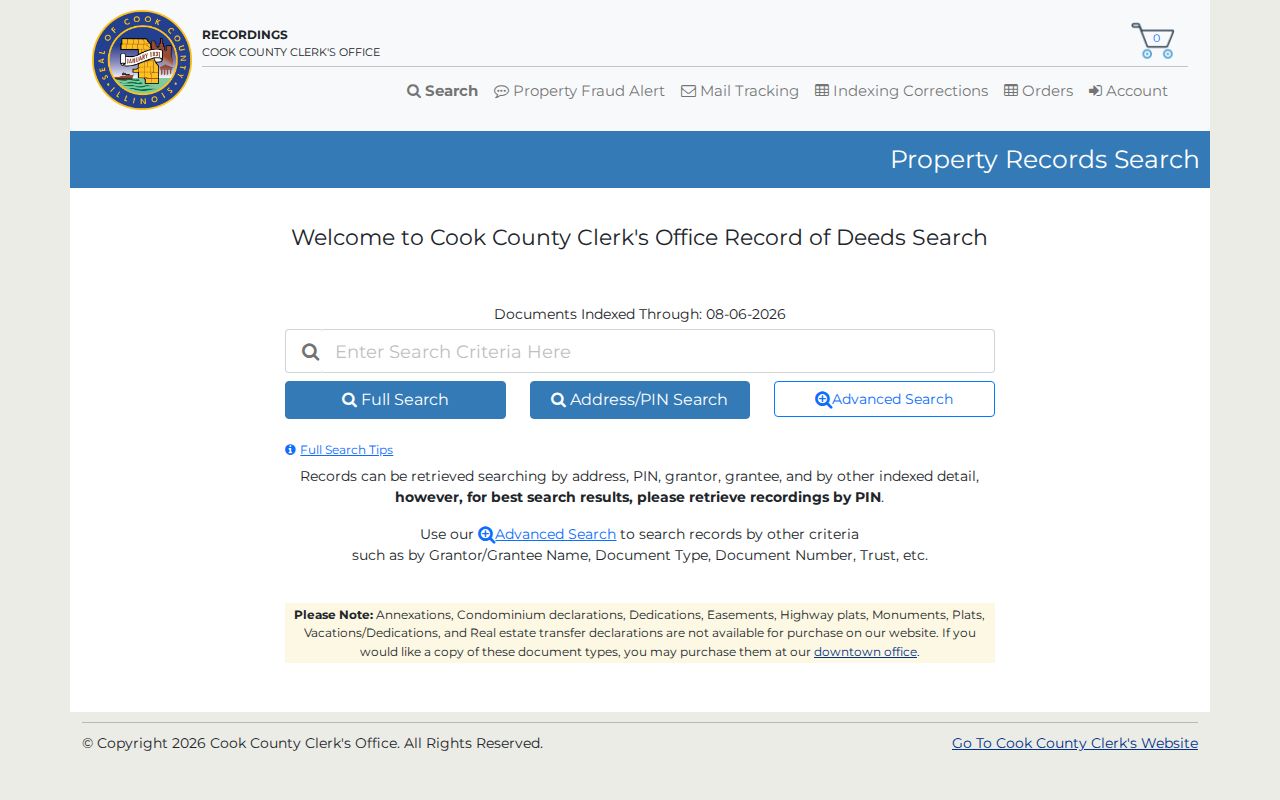
The Cook County Clerk’s basic recording search accepts name, document number, property address, and PIN. Its live “Documents Indexed Through” date was August 6, 2026 during research. Save that date with every result. A deed absent today may simply be newer than the portal’s current index.
The basic search screen displays those core entry routes.
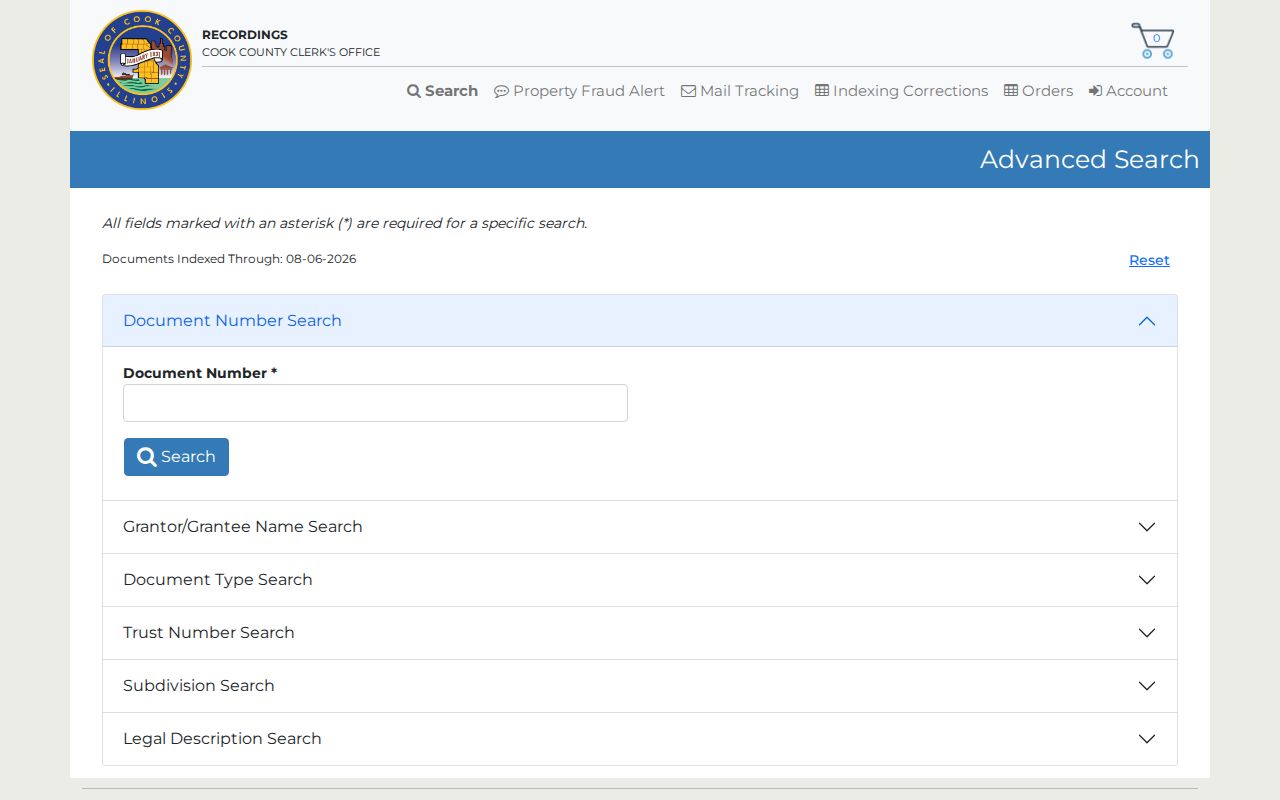
The advanced recording search adds grantor, grantee, document type, legal description, subdivision, trust, and date ranges. It includes deeds, mortgages, liens, releases, trusts, wills, probate-related instruments, plats, easements, and corrected documents. Those filters help explain a transfer without treating every recorded instrument as a sale.
The advanced form shows the mechanics clearly.
Trace Dolton Previous Owners
A chain of title is the linked series of recorded transfers for the same land. It is the strongest route to prior owners, though ownership still does not prove occupancy. Match the PIN and legal description at each step. Names alone can lead to a different parcel or a same-name party.
- Confirm today’s PIN, property location, owner label, and legal description in the Assessor and CookViewer.
- Find the current owner as grantee on a deed. Save document number, recording date, parties, image, and legal description.
- Search that deed’s grantor as an earlier grantee. Restrict by date and parcel facts rather than relying on the name.
- Repeat the link backward. Note mortgages, releases, death affidavits, trusts, foreclosures, and corrected deeds between transfers.
- When the online index stops answering, request the relevant deed book, image, or office search from Clerk Recordings.
- Grantor / grantee
- The grantor transfers an interest; the grantee receives it.
- Chain of title
- The sequence of linked recorded transfers for the same land.
- Legal description
- The lot, block, subdivision, or metes-and-bounds text that identifies land even when its street number changes.
Dolton Directories Fill Occupancy Gaps
Newberry’s Illinois inventory verifies Dolton directory coverage for 1922 through 1925 and 1928 through 1929. Those runs can connect an address with a household clue between census years. The full shelf and entry conventions belong to the Dolton city directory, while an address history uses only the years needed to test one property.
A digitized Polk page shows why the original scan matters. Abbreviations, ditto marks, spouse names, and street forms can be lost in a transcription.
Cite the volume year and page. Do not silently modernize the spelling. Then compare the directory entry with a deed owner and the nearest released census schedule.
Sanborn Maps Test Dolton Residents
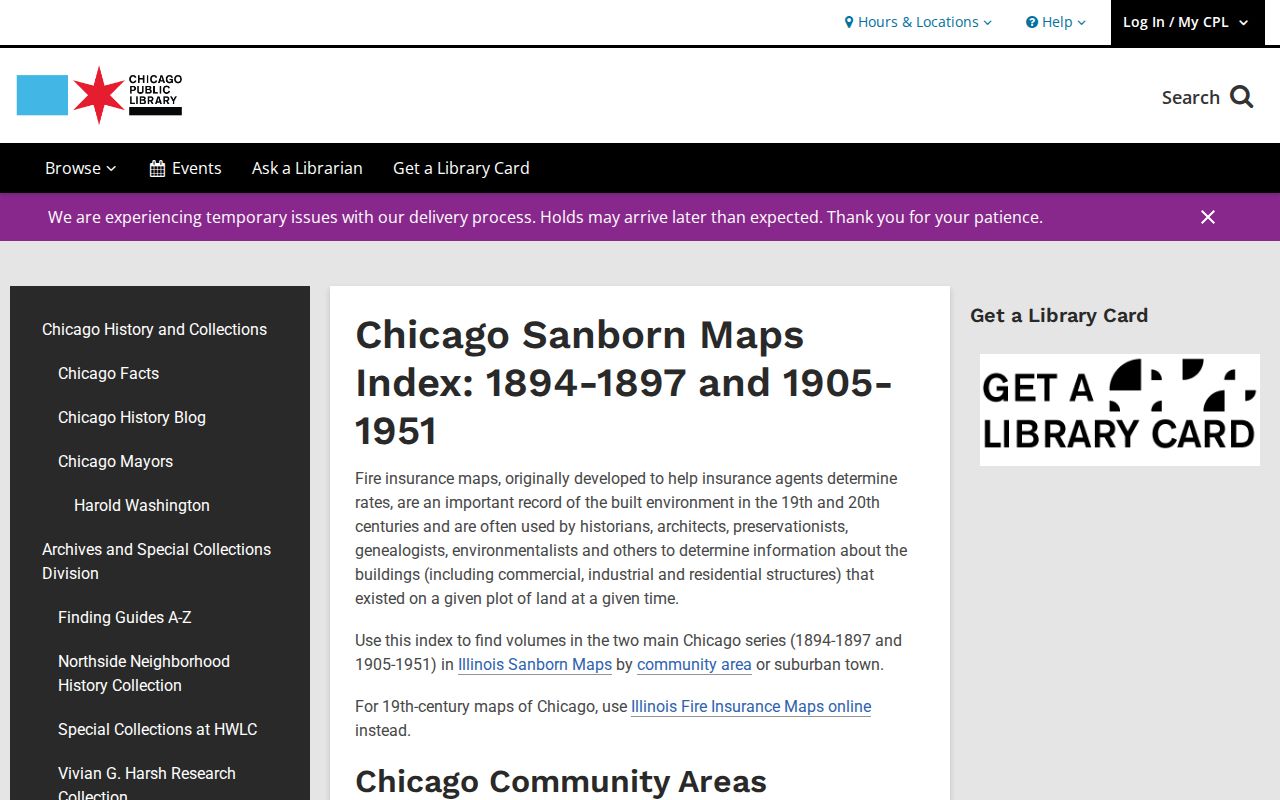
Sanborn fire-insurance sheets provide Dolton building context for 1897, 1911, and 1950. They can show footprints, construction material, use, outbuildings, and lot arrangement. A map does not name previous residents, but it can show whether the structure found in a later directory could have existed in that year.
The Chicago-area Sanborn index helps locate the right year and volume.
Compare sheet numbers, street labels, and lot shapes. A missing modern number is not proof the address was vacant. Dolton’s current code points to State Street as a numbering baseline and to the Village Atlas as the local tie-breaker, but no complete historic renumbering chronology was found.
Pointer Newspapers Trace Dolton Residents
Searching one newspaper title can hide a former household. The local sequence moves from the Dolton Pointer into combined Dolton/Riverdale and later regional titles from the 1970s into the 1980s. The Illinois newspaper holdings index records those title variants.
Try the resident name, spouse, address, church, school, and nearby street under each title. An obituary can supply relatives and burial clues, while a property notice may identify an estate or legal event. Treat the item as dated evidence. It does not prove the person stayed at the address before or after publication.
Confirm Dolton Previous Households
Owners are only part of the story. To test who lived here before, place directory years beside the nearest public census. First locate the address in a directory. Next find the census enumeration district, the geographic area assigned to one census taker. Read neighboring households because street order can confirm the block even when a number is hard to read.
Then cross-check names through the Dolton Public Library’s genealogy resources, South Suburban Genealogical and Historical Society cemetery and local files, and obituary indexes. Probate-related recordings or court files may explain why an owner name changed after a death. Mark every gap rather than joining two same-name people on guesswork.
Lawful use. Research Dolton previous residents for house history, genealogy, or estate work. Never use an address trail to track, threaten, or harass a living person.